In 2026, private security in France and Europe will shift towards a “resilience + convergence” approach : convergence of safety/fire safety/cybersecurity/business continuity, driven by data (sensors, video, access control, IoT) and reinforced by AI (anomaly detection, prioritisation, reporting). Technological investments are focused on AI video analytics, unified platforms (PSIM / physical SOC), remote supervision, cybersecurity for industrial environments (OT), drones & anti-drones, and autonomous patrol robots. The European regulatory framework is becoming stricter (NIS2, CER, AI Act), encouraging sensitive sites to professionalise their systems, track their decisions and better manage risks. (EUR-Lex)
Private security executives – CEOs, COOs – face a familiar challenge: protecting more areas for longer periods of time, with teams under pressure and hybrid, evolving threats. On the ground, operators face the same reality: larger environments, higher expectations, and near-zero tolerance for delayed response times.
The issue is no longer just about “intrusion/malicious activity” or “cyber”: it is the intersection of the two. Attackers know that the physical world is now digitally controlled: badges, gates, IP cameras, VMS, connected fire systems, industrial automation, sensors, private networks, etc. Public reports confirm this pressure: ENISA documents a European landscape dominated by rapid exploitation of vulnerabilities, ransomware and increasingly complex attack chains. (enisa.europa.eu) In France, ANSSI continues to observe attacks aimed at extortion and espionage, as well as destabilisation actions driven by hacktivist logic. (cyber.gouv.fr)
In Europe, NIS2 is prompting many players (either directly or via their contractors) to formalise risk management, incident management and supply chain security. (EUR-Lex)
At the same time, the CER (Critical Entities Resilience) focuses on the operational and physical resilience of critical entities in the face of threats ranging from natural disasters to terrorist attacks and threats. (EUR-Lex)
The very concrete consequence for private security is that clients are demanding less “surveillance hours” and more measurable results: coverage, response time, traceability, procedures, evidence, compliance.
In 2026, technology purchases will focus on operational efficiency: reducing noise, speeding up decision-making, documenting actions, and securing systems.
A. Video surveillance enhanced by artificial intelligence
Video remains the king of sensors… provided that the volume can be handled. Investments are going towards:
However, the regulatory context imposes discipline: theAI Act strictly regulates certain practices (and has already enforced bans on uses deemed unacceptable). The milestones and general direction are reiterated by official European channels. (European Digital Strategy) we will see a rise in “useful” AI (anomalies, industrial security, perimeter security) and a decline in “risky” AI (certain forms of biometrics in publicly accessible spaces, disproportionate uses).
B. Hypervision/PSIM: a single “cockpit” for quick decision-making
Clients expect a more structured approach: fewer silos, more consistency.
It is often the investment that “unlocks” the ROI of the other building blocks.
C. Cybersecurity of safety systems and industrial OT environments
IP cameras and badge readers are no longer “outside the scope of IT”. We are investing in:
The impetus is both operational and regulatory, driven by the NIS2 dynamic and the rise in observed attacks. (enisa.europa.eu)
D. Drones and anti-drones: detection and procedure
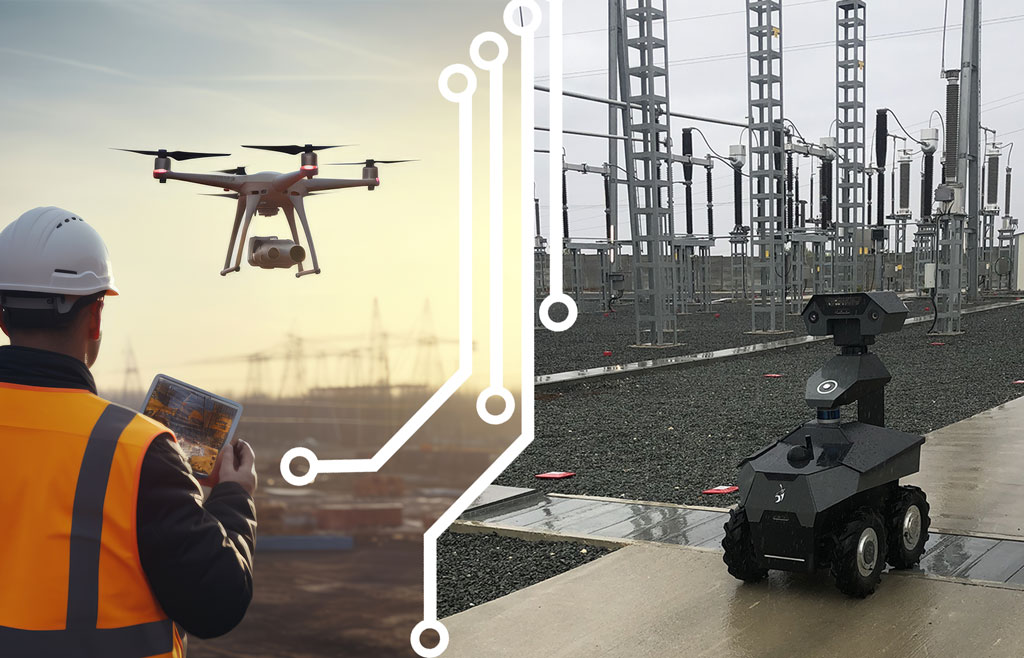
Drones are becoming an operational reality: reconnaissance, tracking, disruption.
Investments are focused on:
This issue is less technical than organisational: value comes from a controlled response.
E. Robust connectivity and edge computing
Many projects fail because of one detail: network coverage.
In 2026, we are budgeting more:
It is the invisible foundation that makes the rest reliable.
F. Autonomous patrol robots
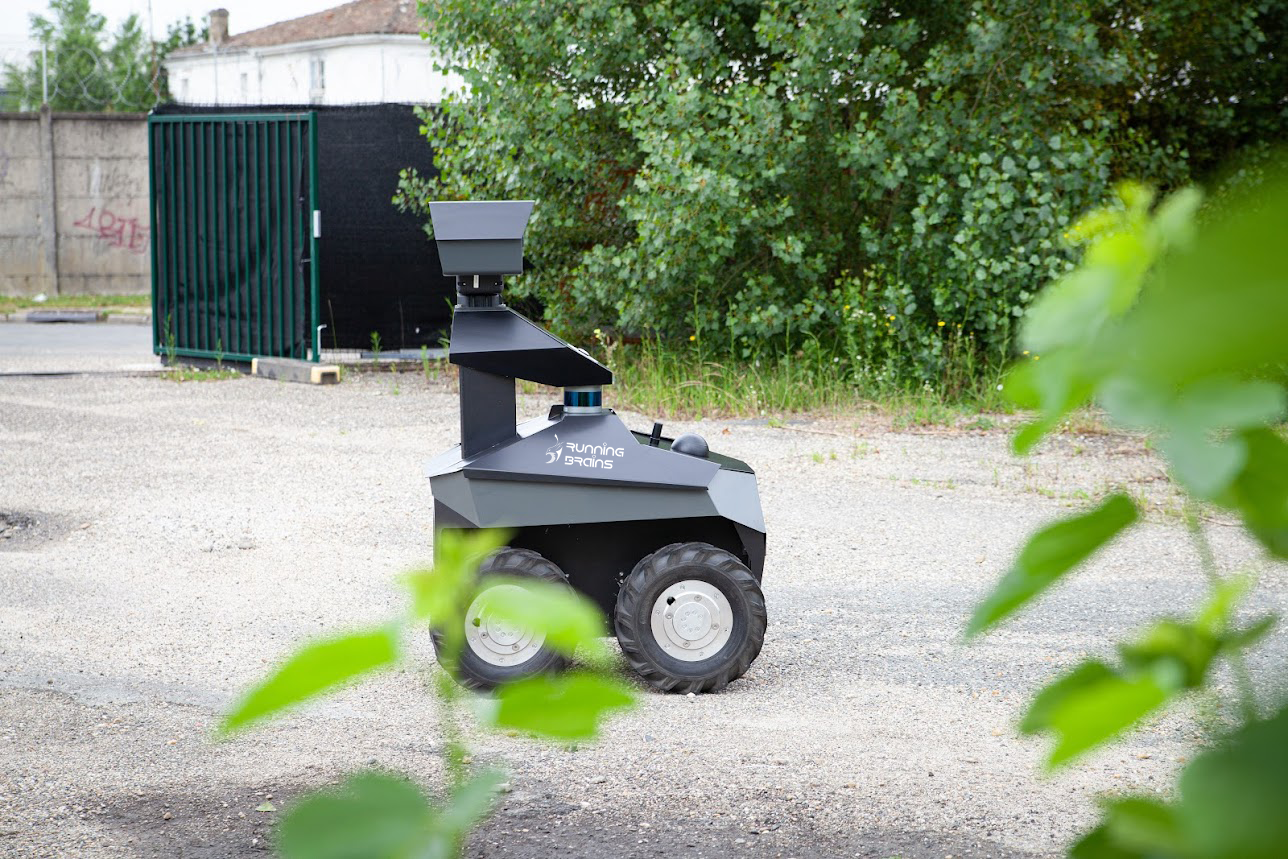
In 2026, patrol robots will become an investment in their own right, not an “innovation bonus”. Their value lies in their use: mobile presence, standardised patrols, verification, evidence collection (video, thermal, time-stamped events) and contextualised alerts to the security control centre or remote surveillance system.
Why is 2026 a turning point in the integration of autonomous surveillance robots? Several trends are converging:
Globally, figures for service robotics confirm strong momentum, driven in particular by staff shortages and the quest for efficiency. (IFR International Federation of Robotics)
The best deployments in 2026 follow a simple principle: robots do what is time-consuming, routine, traceable, or even dangerous; agents do what is ambiguous, relational, or strategic.
Use cases in Europe:
What makes you win:
What causes failure:
Today, sensitive sites face very real challenges, often multiple ones:
Recruitment, retention, skills development (tools, procedures, incident management).
In 2026, the players who perform well will not be those who pile up layers of hardware. It will be those who build a complete chain:
Detect → qualify → decide → intervene → prove → improve.
To achieve this, companies are investing in and turning to Industry 4.0 tools. Indeed, AI, unified platforms, cybersecurity, drones/anti-drones and autonomous robots are redefining the private security industry and making operations easier for teams: fewer unnecessary alerts, greater control, traceability, improved security and increased safety.

CMO at Running Brains Robotics