Autonomous security robots are still subject to common misconceptions: that they are too complex, difficult to integrate, or ill-suited to existing security staff or systems. The GR100 proves the opposite. It carries out autonomous patrols, report alerts, helps verify situations and collects useful information for teams… This article deconstructs 5 common myths to show how the GR100 provides a reliable, sovereign and concrete solution for private security and businesses.
Security robots are gradually establishing themselves as key tools for enhancing surveillance and security at sensitive sites. Industrial sites, logistics hubs, warehouses, critical infrastructure or remote areas: many environments today need to ensure continuous surveillance, track events, respond rapidly to anomalies and protect their on-site teams.
Through their autonomous patrols, real-time alert reporting, verification of incidents and on-site data collection, security robots provide a practical response to these challenges. They help improve on-site coverage, make certain recurring tasks more reliable and provide operators with useful data at the right time.
However, despite their operational benefits, these technologies remain subject to misconceptions. Questions still arise regarding their role alongside security staff, their reliability, their integration into existing systems, data protection and their business value.
This article addresses five common misconceptions surrounding the GR100 security robot. The aim is simple: to explain what it actually offers private security professionals, how it works with the RBOC platform, and why it stands out as a reliable, monitorable and autonomous field support tool.
This is often the first question raised.
No, the GR100 is not designed to go againsn’t agents in the field. It acts as an intelligent, mobile and complementary tool, capable of handling repetitive and time-consuming tasks: scheduled patrols, taking measurements, raising alerts, gathering information, verifying situations and ensuring staff safety.
Safety officers retain their central role. They analyse situations, apply procedures, make decisions and intervene when necessary. The robot provides them with complementary information to better understand what is happening on site.
The RBOC* platform facilitates this supervisory work. From the interface, operators can monitor patrols, view alerts, access live video feeds, initiate a verification process or remotely control the robot if the situation requires it.
The GR100 thereby provides a mobile, regular and documented presence on the ground. It helps teams gain greater visibility, without altering their role in analysis and decision-making.
For security officers, the GR100 helps to:
The robot provides operational support. Humans remain at the centre of the decision-making process.
A security site already has its own equipment, routines and constraints: fixed CCTV cameras, alarms, access control, detectors, human supervision, patrol procedures, sensitive areas and intervention protocols.
The challenge is therefore not to add a standalone piece of technology. It is about integrating the robot into an organisation and processes that are already established.
The GR100 has been designed with this on-the-ground reality in mind. It complements fixed systems thanks to its mobility. It can move around defined areas, follow patrol routes and relay information to operators.
The RBOC* platform centralises data from the robot: patrol monitoring, alerts, video feeds, event history, verification and remote control. Teams thus have a clear control centre to utilise the information reported by the GR100.
The deployment of a GR100 robot on site is carried out in stages:
It is also essential to communicate about the robot internally and prior to its integration so that field teams can familiarise themselves with the tool and understand its usefulness. As Patrick Antoszewski, Securitas site manager, explains: “The GR100 patrol robot is a perfect complement to a team of security guards. It allows them to focus on other tasks. Today, it is fully integrated into the team and complements it effectively.” The teams’ acceptance of it makes it a strategic tool in day-to-day operations.
In private security, reliability is no minor detail. A system must be stable, understandable, maintainable and capable of evolving with the needs on the ground.
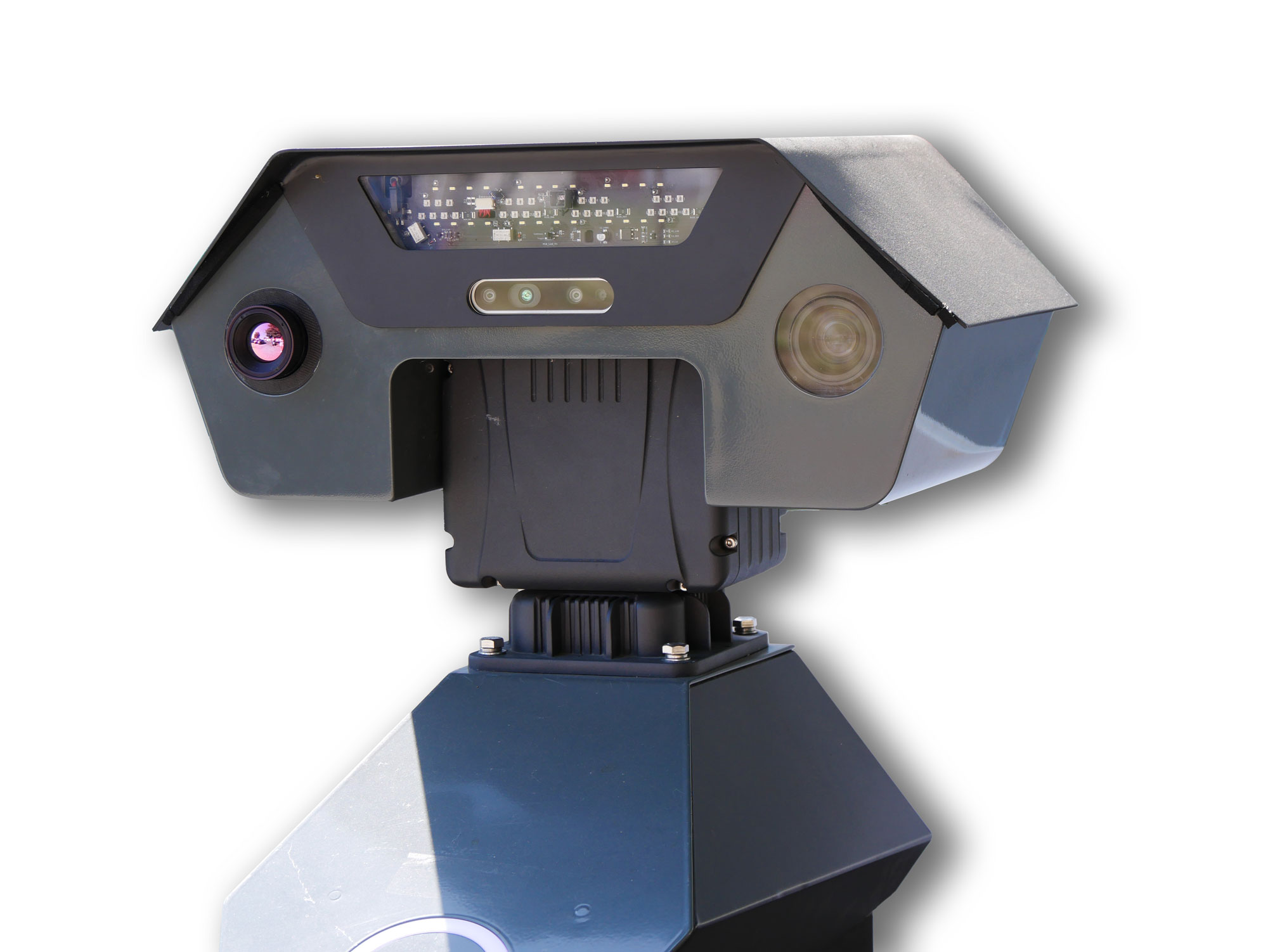
The GR100 is based on a comprehensive architecture. It does not operate solely on the basis of artificial intelligence. It combines sensors, cameras, embedded software, navigation algorithms, detection algorithms and a secure, encrypted connection to the RBOC* platform.
This combination enables it to move, perceive its environment, carry out patrols, avoid obstacles, detect certain anomalies and transmit actionable and secure information to operators.
Reliability also depends on the ability to maintain the system over the long term. It is worth noting that we manage the entire design chain for our robots in-house, and moreover, in France. This technological control is part of a strategy of sovereignty. It allows us to be agile and to retain control over design, integration, software updates, maintenance, cybersecurity, and the evolution of the robot and its business functionalities.
Furthermore, the choice of technological sovereignty touches on very practical issues:
This expertise gives our clients greater visibility and provides us with valuable agility and adaptability.
Data protection is a major issue. Information collected in the field must be regulated, secured and accessible only to authorised personnel.
The GR100 can report various types of information: alerts, detection images, patrol points, anomaly detections, measurements, video streams, or even elements useful for resolving doubts…
Our data management is based on a secure framework: encryption, secure tunnel, access control, hosting on servers located in France, GDPR, annual external audit by an ANSI-certified company, ISO 207001 certification (pending).
The RBOC* platform thenenables the retrieval and exploitation of information. Teams can view alerts, track event history, verify the progress of patrols and analyse data useful for decision-making, etc.
The information reported by the GR100 robot via the RBOC enables teams to optimise their surveillance, assess threats remotely, carry out preventive maintenance and objectively evaluate the robot’s performance.
For example, this data enables them to:
When properly utilised, this data enhances traceability and improves the management of the security system.
This is false. The value of an autonomous security robot like the GR100 is not limited to the technology itself. Its value is measured in everyday use: what it brings to staff, security managers and the organisation.
The GR100 helps ensure more consistent surveillance thanks to its autonomous rounds. It can move through defined areas, cover large or less visible spaces, and transmit alerts when an anomaly is detected.
In case of doubt, operators have access to additional information before deciding on an intervention. This can improve situational awareness and reduce unnecessary, or even dangerous, movements (e.g. gas leaks, fires or armed intrusions).
The RBOC* platform also facilitates mission tracking. Patrols, alerts and events can be viewed, logged and analysed. Security managers thus have a clearer picture of the actions carried out on the ground.
For security guards and operators, the GR100 patrol robot provides on-site support. It handles certain routine surveillance tasks, increases responsiveness in the event of an anomaly, ensures staff safety and provides more context prior to intervention.
For security managers, it improves traceability, centralises information, covers grey areas, enables the objective assessment of safety and security performance, and facilitates mission monitoring.
For businesses, it enhances the continuity of surveillance, responsiveness, the quality of available data and, ultimately, ROI.
Common misconceptions about autonomous security robots often stem from a lack of understanding of how they are used in the field. Once the key questions have been addressed – reliability, cybersecurity, data, integration, the role of security officers – the conclusion is clear: a robot like the GR100 does not add unnecessary complexity. It reinforces the existing security system.
Autonomous patrols, real-time alerts, verification of incidents, event traceability, remote supervision: the GR100 provides security teams with what they need on a daily basis to monitor, document and respond more effectively.
With the RBOC platform, the information reported by the robot becomes immediately actionable: patrol tracking, alert viewing, access to field data, and manual control if necessary. Teams remain in control, with a clearer picture of what is happening on site.
The 5 misconceptions presented in this article show that there is no reason to be wary of a well-designed, well-integrated and well-supervised autonomous security robot. The GR100 meets the current expectations of private security: greater mobility, better traceability, faster response times and improved continuity of surveillance.
The future of private security is being built with better-equipped teams. Our patrol robots are part of that.
RBOC* : Running Brains Operations Center

CMO at Running Brains Robotics
Editorial intern at Running Brains Robotics