Above all, autonomous robots bring greater consistency to patrols, provide more contextually relevant alerts and enable quicker resolution of uncertainties. Artificial intelligence helps to detect and categorise incidents, whilst officers retain control over analysis, decision-making and response.
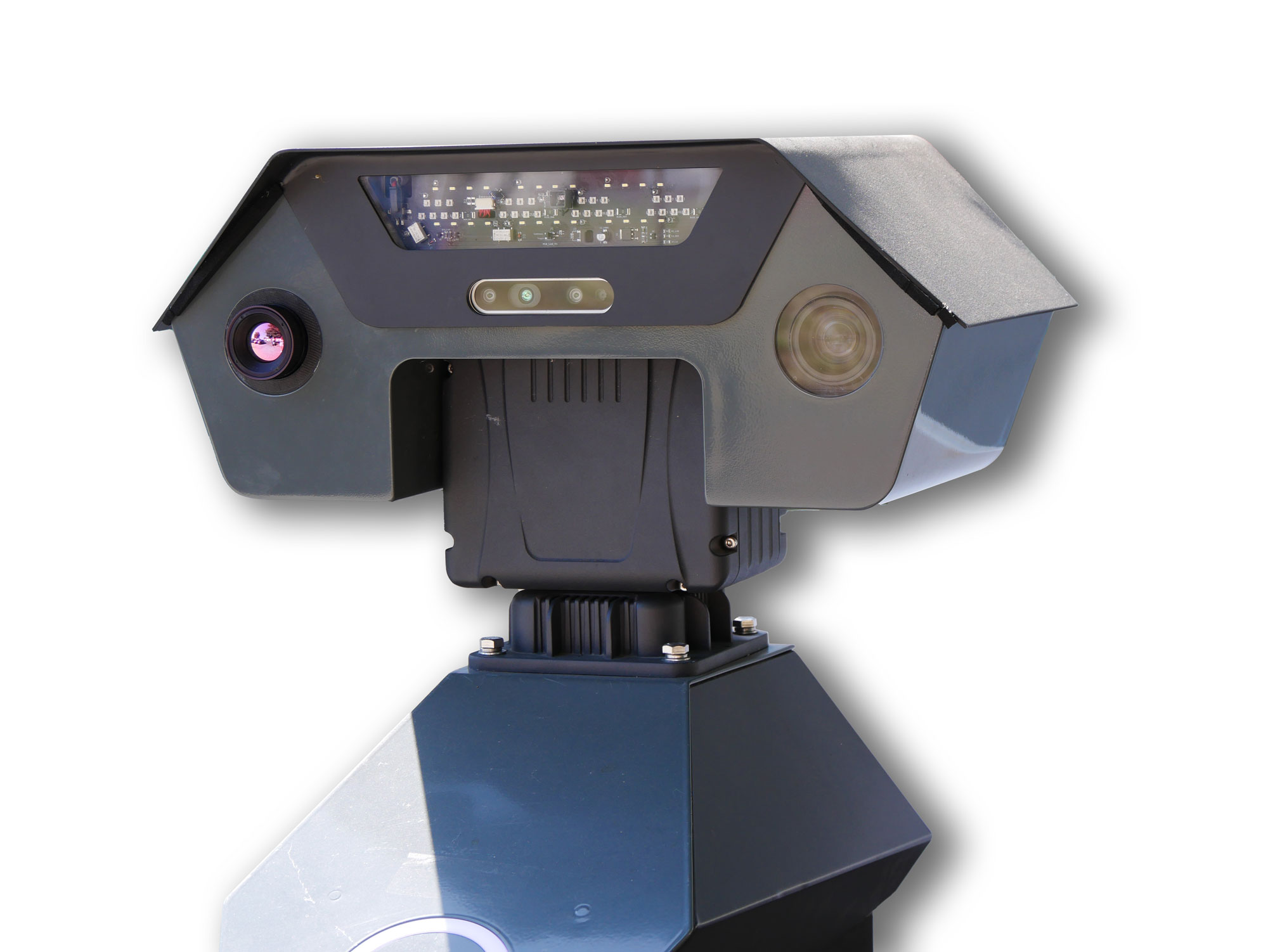
An autonomous security robot equipped with artificial intelligence and perception algorithms can provide additional capabilities for movement, observation and data collection. However, its value does not lie solely in its autonomy or the performance of its sensors. For security managers, the key issue remains the operational benefits achieved in the field.
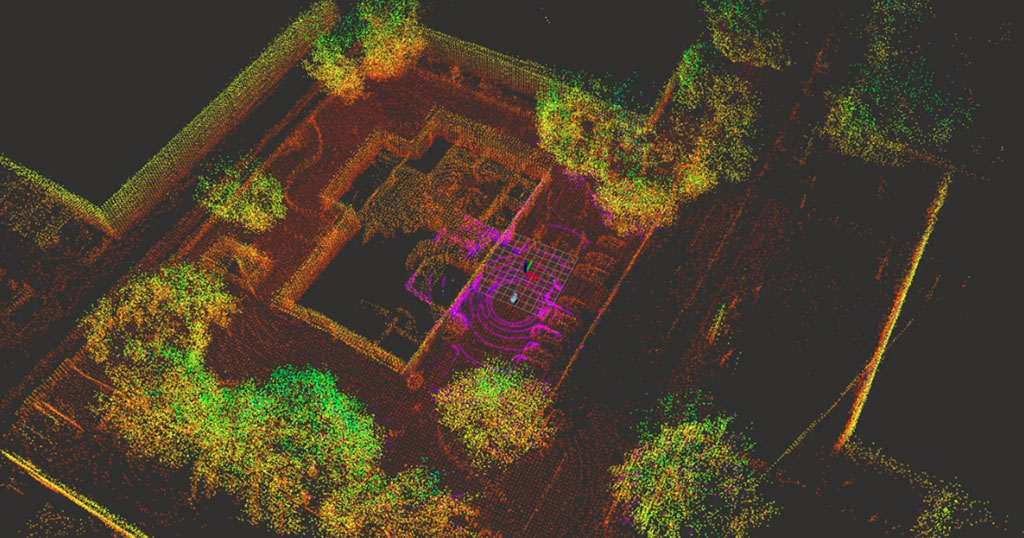
With the GR100, the RB-Nav navigation software enables predefined missions and patrols to be carried out, whilst the RB-Sens perception algorithms analyse the data collected to identify and classify specific events. The information is then relayed to operators, notably via the RBOC (Running Brains Operations Centre), to facilitate its analysis and the resolution of any uncertainties.
This combination of autonomous robotics, artificial intelligence and human expertise addresses five key aspects of security: the reproducibility of patrols, the contextualisation of alerts, the speed of verifying incidents, the allocation of tasks between robots and officers, and the use of data to improve surveillance systems.
The GR100 carries out missions based on defined routes, waypoints and inspection targets.
This reproducibility makes it possible to:
The robot therefore helps to standardise certain repetitive surveillance and information-gathering tasks.
This is illustrated by the comments of Louis Gauthier, Head of Innovation Projects at Groupe ADP: “It patrols 24 hours a day, thereby deterring intrusions and detecting any anomalies. ”
The fact that the patrol is continuous does not mean that the robot interprets all situations on its own. It enables a consistent capacity for movement, observation and reporting of information on the areas covered.
An actionable alert is not merely a notification of an event.
It must provide the teams with the information required for its analysis:
This contextualisation reduces the time spent investigating the source of the alert and makes it easier to deal with.
Patrick Antoszewski, site manager at Securitas, describes this link between detection and human response in no uncertain terms: “The robot immediately sends an alert upon detection, enabling the security guard to respond. ”
The benefit therefore lies not only in the speed of transmission. It also depends on the accuracy of the data attached to the alert and its consistency with the procedures in place at the site.
Operators may need to monitor several sources simultaneously: CCTV, access control, technical alarms, calls, field reports and patrol logs.
In this context, the alert transmitted by the robot must enable the situation to be clarified swiftly.
Using the information available in the RBOC, the operator can determine whether the event corresponds to:
Artificial intelligence prepares and classifies the information. Interpreting the context, resolving uncertainties and making operational decisions remain the responsibility of security professionals.
Laurent Iltis, Head of Security and Safety at GIE Osiris, clearly articulates this division of roles: “But the decision will remain a human one. […] The GR100 is a genuine decision-making aid. ”
This distinction is a key aspect of integrating artificial intelligence into private security. The system detects, classifies and transmits. The operator cross-checks the alert against other available information, applies procedures and decides on the action to be taken.
Repeated notifications of low relevance can impair the clarity of monitoring and contribute to reduced vigilance.
Adjusting deep learning models, thresholds and qualification rules aims to reduce false positives and better prioritise the information reported.
Human-robot complementarity does not rely on the complete replacement of staff by an autonomous system.
The GR100 can handle repetitive and standardised tasks: programmed routes, monitoring of checkpoints, data collection and raising alerts. Staff retain responsibility for tasks requiring an assessment of the context, human interaction, decision-making or physical intervention.
Laurent Iltis, security manager at GIE Osiris, refers to this as human-robot complementarity, in which the GR100 enhances ground surveillance whilst maintaining in-house security teams.
This breakdown enables operators to focus their attention on:
The data collected by the GR100 can also be used to analyse the organisation of surveillance.
They make it possible, for example, to analyse:
This information provides security managers with objective data to help them adapt routes, timetables, surveillance plans and procedures for verifying suspicious activity.
In the private security sector, artificial intelligence is primarily used to make better use of the information gathered in the field. It helps to detect an incident more quickly, classify it and provide operators with the information needed to resolve any uncertainties.
This capability becomes particularly valuable in the face of increasingly numerous and evolving threats. At industrial, strategic, military or critical sites, external perimeters and isolated installations remain difficult to monitor continuously. Autonomous robotics makes it possible to extend coverage of these areas, carry out patrols according to a defined protocol and report anomalies along with their location and context.
The GR100 is designed with this in mind. Designed and manufactured in France, it is based on technologies developed and mastered by our Running Brains Robotics team. In the current geopolitical climate, this technological sovereignty is a tangible priority: it concerns control over software, data, maintenance and system upgrades.
Artificial intelligence thus adds an extra layer of analysis to existing security systems. It enhances the continuity of surveillance and the quality of alerts, whilst professionals retain responsibility for interpretation and decision-making.
*RBOC: Running Brains Operations Centre.

CMO at Running Brains Robotics
Editorial intern at Running Brains Robotics